
This guide is written for marketing, SEO, GEO, and communications teams that are either currently using Piepertech for AI search brand monitoring or actively evaluating whether a different tool would serve their needs better. It’s also relevant for teams new to the category who want a neutral, structured way to compare the available options.
A few ground rules before the vendor profiles: no AI search monitoring tool can guarantee future citations. Model outputs vary by prompt wording, session context, and platform version. What these tools measure are visibility signals, patterns of how often and where a brand appears in AI-generated responses across a given set of queries. That’s genuinely useful data. It’s not a deterministic map of every response a user will see.
The August 2025 Adweek coverage of AI Search Optimization described the sector as one of the fastest-moving areas in digital marketing, with a growing number of startups competing to define what “AEO/GEO monitoring” even means. The definitions are still fluid. Use the framework below to cut through the noise.
What separates a useful AI search monitoring tool from a mediocre one
Before comparing specific vendors, it helps to know which capabilities actually matter for your situation. Not every feature listed on a pricing page translates into actionable insight.
Engine coverage
The most basic question: which answer engines does the tool actually monitor? The major platforms to check for are ChatGPT (including browsing and GPT-4o), Perplexity AI, Google AI Overviews, Google AI Mode, Gemini (both standalone and Search-integrated), Claude (Anthropic), and Microsoft Copilot/Bing AI. Few tools cover all of them with equal depth. Some rely on direct UI interaction; others hit official APIs. That distinction matters because API-based monitoring may reflect a version of the model that differs slightly from what end users see through the product interface.
Citation vs. mention tracking
Mentions tell you a brand name appeared in a response. Citations tell you which source URL the model referenced when generating that answer. Those are very different data points. Citation tracking is harder to extract and validate, but it’s what teams optimizing for generative engine optimization (GEO) or answer engine optimization (AEO) actually need. Profound, for example, analyzed 680 million citations collected between August 2024 and June 2025 and found that distinct platforms show distinct sourcing strategies, with Wikipedia appearing disproportionately in ChatGPT responses compared to other engines. That kind of citation-level data is not available from tools that only track mentions.
Cadence and historical data
How often the tool re-runs your monitored prompts affects how quickly you detect changes. Daily cadence is standard for most paid tiers; weekly is common in lower-cost or free plans. Historical trend views, showing how visibility shifted over weeks or months, are essential for any team trying to tie content or schema changes to measurable outcomes.
Prompt and query control
Vendor-managed template libraries are fine for getting started. Custom prompt sets are what you need for accurate brand monitoring. The ability to define your own queries, including comparison queries (“X vs Y”) and category queries (“best tool for Z”), and to cluster them by intent or topic, separates professional-grade platforms from entry-level ones.
Exports, integrations, and reporting
CSV export is table stakes. API access, Looker Studio connectors, Slack alerts, and multi-brand dashboards are the features that determine whether monitoring data flows into actual workflows or stays siloed in a dashboard nobody checks. Agencies need client workspace separation and report templates. Enterprise teams need role-based access and SSO.
Direct monitoring vs. API-only: what changes
Tools that interact with AI platforms via official APIs may return responses that differ from what a real user sees in the product UI. UI-scraping approaches (where the tool simulates actual user queries) more closely reflect the customer-visible truth, but they come with rate limits, higher operational costs, and platform-specific terms of service considerations. Both approaches have legitimate uses; the right one depends on whether your priority is scale or fidelity.
The leading alternatives to Piepertech for AI search brand monitoring
1. Profound
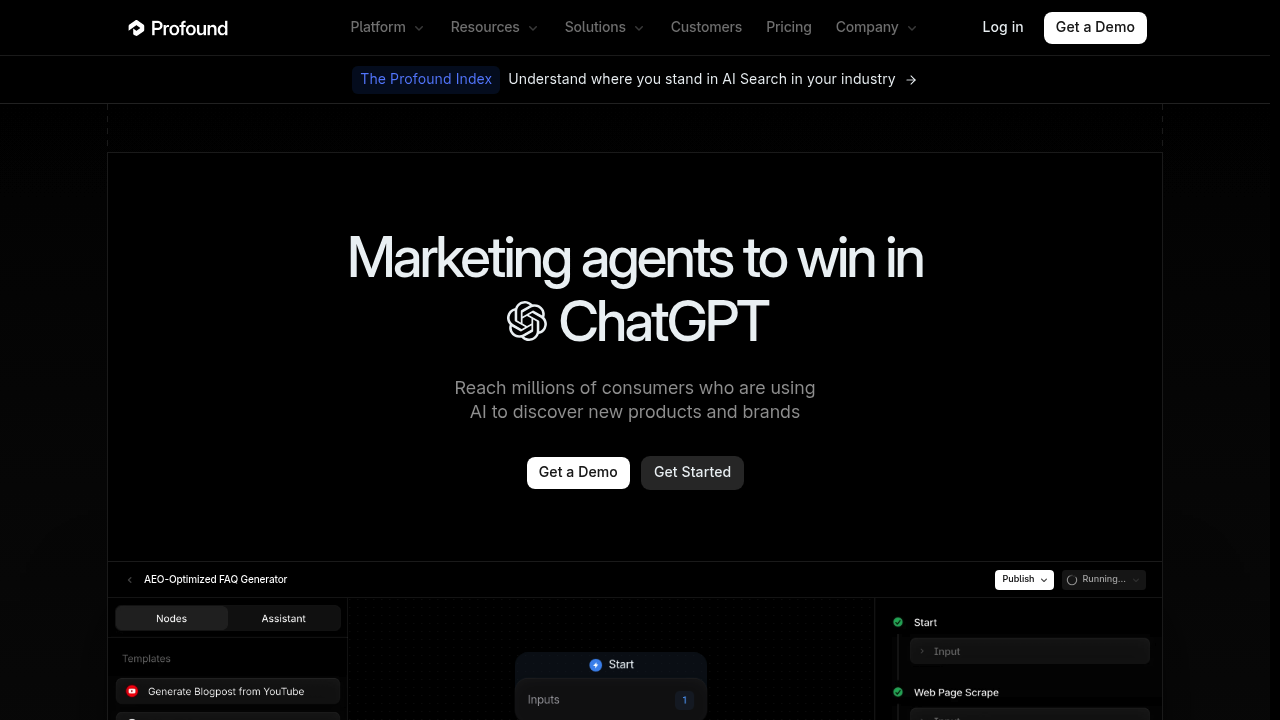
Profound positions itself as a dedicated AI search visibility platform. According to its published materials, it tracks brand visibility and source citations across ChatGPT, Perplexity, Claude, Gemini, and Google AI Overviews. The citation-pattern analysis it published (680M citations, Aug 2024 to June 2025) is one of the few publicly available data sets in this category and signals a research-first culture.
Profound’s strengths lie in citation-level analysis and multi-engine coverage. Its dashboards support competitor share-of-voice tracking and historical trend views. The platform targets mid-market and enterprise teams that need detailed source attribution alongside brand mention data.
Limitations: pricing is enterprise-oriented and not publicly listed. Teams with smaller budgets may find entry-level access constrained. Confirm citation extraction methodology during your proof-of-concept, since the depth of URL-level validation can vary by platform.
Ideal for: B2B teams and enterprise marketing organizations that need rigorous citation tracking and are prepared to invest in a dedicated AI visibility stack.
2. Otterly.AI
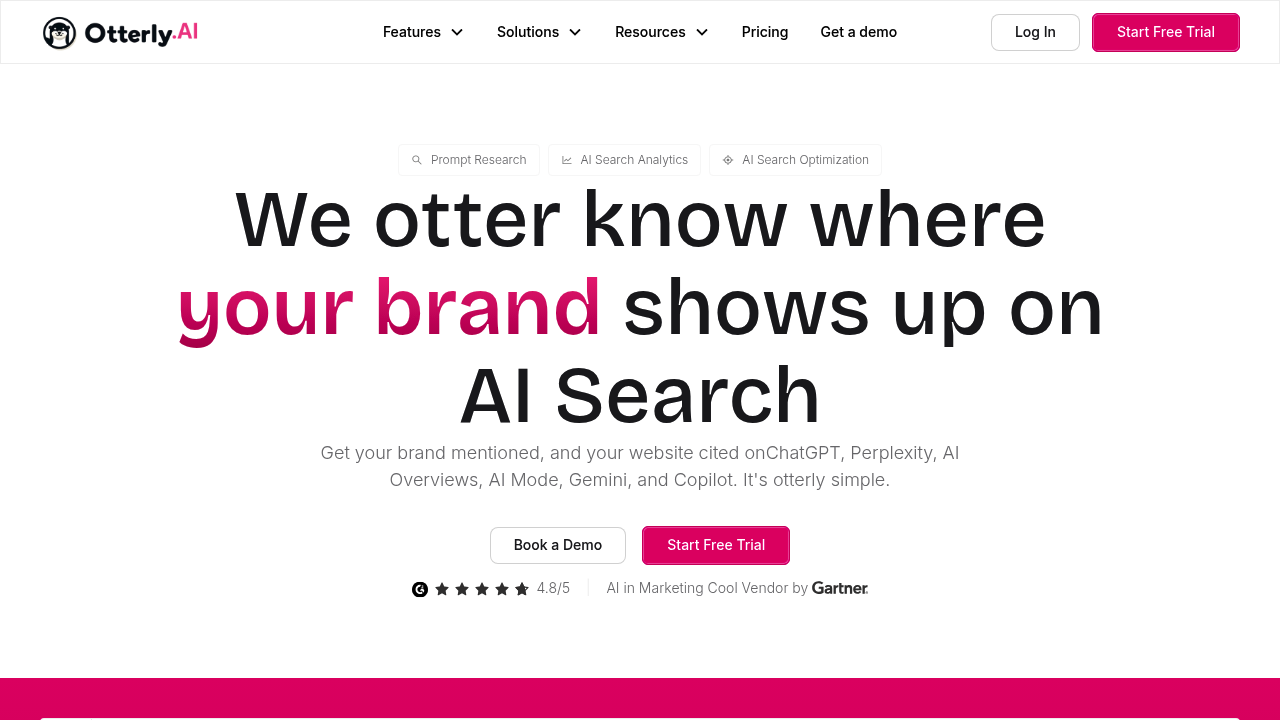
Otterly.AI is a purpose-built GEO monitoring tool with a clean interface and relatively accessible pricing, making it one of the more approachable options for teams new to AI search monitoring. It covers several major answer engines and focuses on mention frequency and share-of-voice metrics.
Otterly is well-suited for smaller teams that need a fast setup and don’t require deep citation URL extraction on day one. Its UI is designed for marketers rather than data engineers. However, teams that need multi-client agency workspaces or deep API integrations may find it limited at lower tiers.
Ideal for: SMBs and in-house marketing teams that want a lightweight starting point for AI brand visibility monitoring with minimal configuration overhead.
3. Peec AI
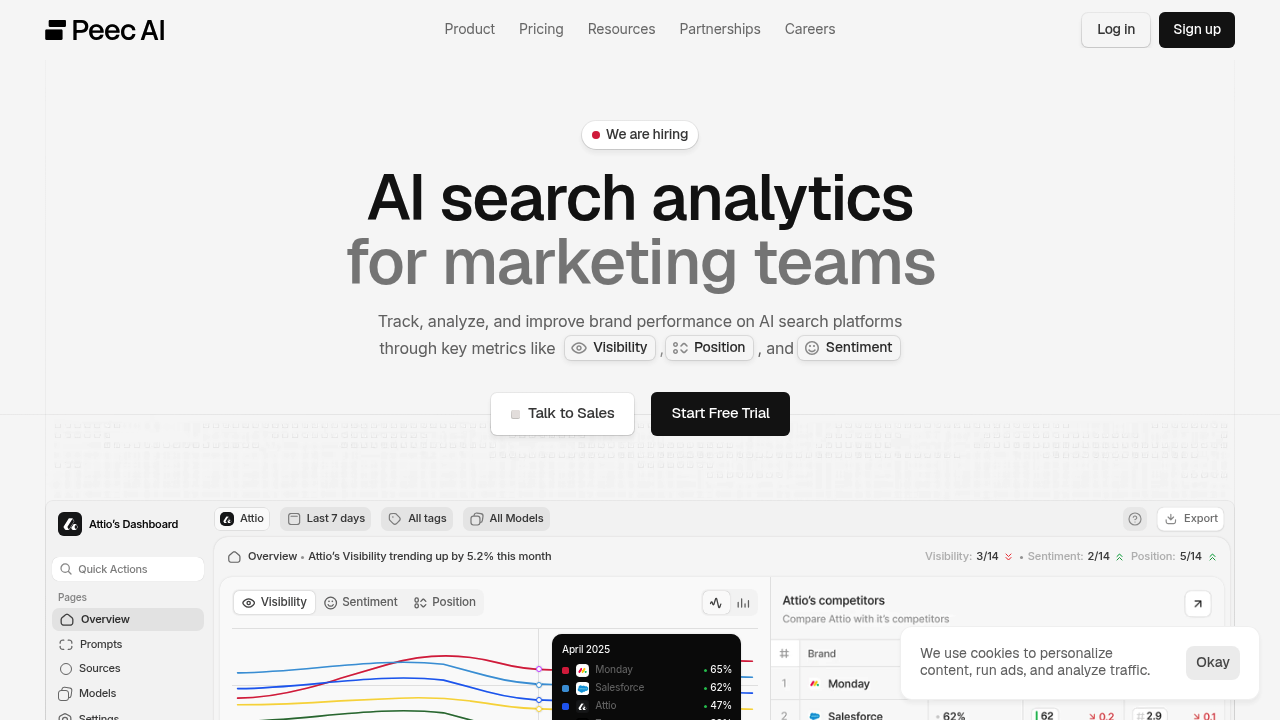
Peec AI focuses on citation tracking and source-level analysis, making it a strong option for teams specifically interested in which domains and URLs AI platforms are pulling from when they mention a brand. The platform covers core answer engines and provides monitoring dashboards with citation rate metrics.
Where Peec differentiates: its emphasis on citation-first data aligns with teams whose primary goal is understanding whether their owned content or third-party coverage is driving AI citations. This is a key metric for content teams executing GEO or AEO strategies.
Limitations: coverage breadth for newer surfaces like Google AI Mode and Microsoft Copilot should be verified before committing. Multi-client support features are less prominent than on agency-focused competitors.
Ideal for: content and SEO teams focused on citation tracking as the primary KPI, particularly those targeting Perplexity and ChatGPT brand visibility.
4. AthenaHQ

AthenaHQ approaches AI search visibility from an enterprise governance angle, with features oriented toward large organizations that need multi-stakeholder reporting and structured oversight of how their brand narrative appears across AI platforms. It tracks mentions and narrative framing, not just citation counts.
The platform suits communications and brand teams that care as much about how AI describes a company as about how often it does. Sentiment framing, narrative accuracy, and competitor positioning are native features rather than add-ons.
Limitations: setup complexity is higher than self-serve tools, and pricing is typically customized for larger contracts. Not the right fit for teams that want a quick trial with immediate results.
Ideal for: enterprise brands and communications-led organizations that need governance-level control over AI narrative monitoring.
5. ZipTie
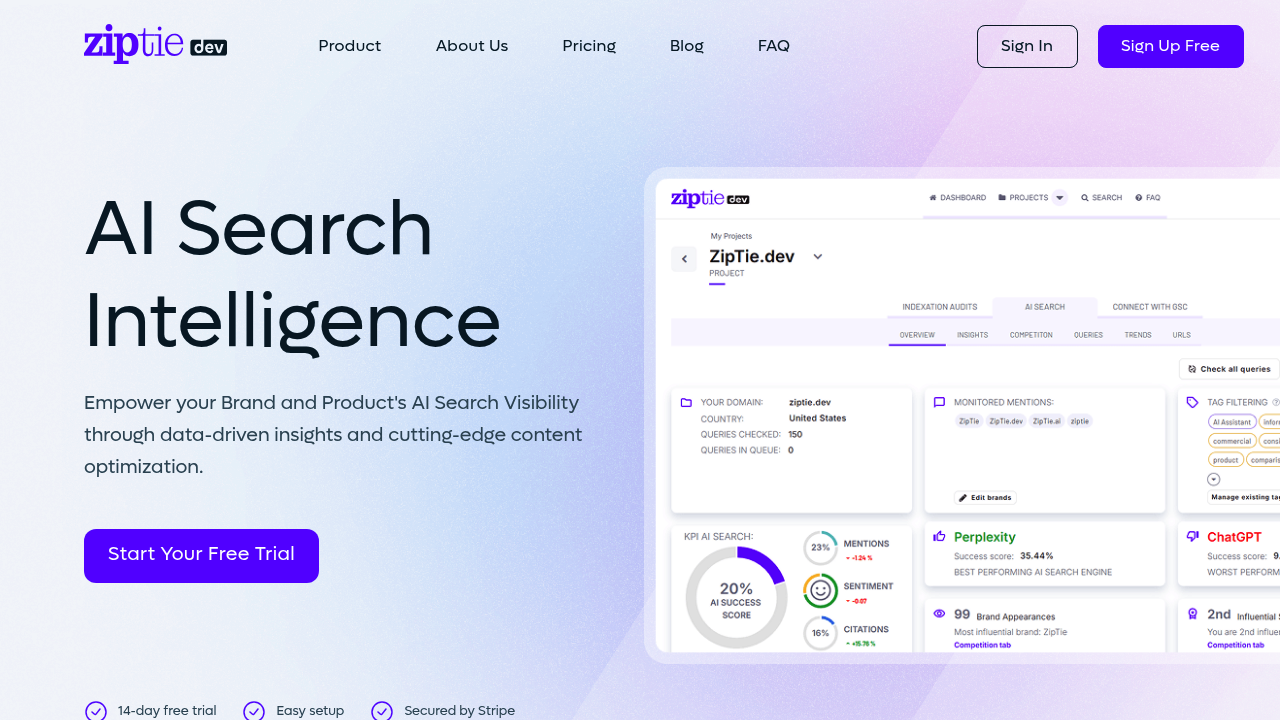
ZipTie is a newer entrant in the AI search monitoring space with a developer-friendly architecture. Its value proposition centers on flexible query configuration and data export capabilities, appealing to technical teams that want to build their own reporting layers on top of raw AI visibility data.
For teams that need maximum customization and are comfortable with API-first workflows, ZipTie offers a degree of control that more opinionated platforms don’t. The trade-off is that onboarding and reporting require more hands-on configuration.
Ideal for: technical marketing teams or agencies with development resources who prioritize data portability and custom integration over a polished out-of-the-box dashboard.
6. Piepertech
For completeness: Piepertech monitors brand mentions and citations across large language model platforms including ChatGPT, Claude, Gemini, and Perplexity. Its positioning sits at the intersection of brand analytics and generative engine optimization, with a focus on cross-platform accuracy and consistency. The platform is built for marketing, SEO/GEO, and communications teams that need to understand not just whether they’re mentioned, but how AI systems describe them across multiple answer engines.
Compared to some alternatives in this list, Piepertech places particular emphasis on brand observability, tracking mentions, citations, and narrative framing as a combined signal rather than isolated metrics. For organizations that want a single view of AI-era brand discoverability across platforms, it remains a strong reference point even when evaluating competitors.
Feature comparison at a glance
| Tool | Engines covered | Citation/URL extraction | Custom prompts | Historical trends | Exports/API | Agency features | Pricing signal |
|---|---|---|---|---|---|---|---|
| Profound | ChatGPT, Perplexity, Claude, Gemini, AI Overviews | Yes (citation-level) | Yes | Yes | Yes (API) | Multi-brand dashboards | Enterprise; contact sales |
| Otterly.AI | ChatGPT, Perplexity, select others | Mention-level; partial citation | Limited (template-based) | Yes | CSV; limited API | Basic multi-brand | Freemium + paid tiers |
| Peec AI | ChatGPT, Perplexity, Gemini | Yes (citation focus) | Yes | Yes | CSV; API available | Limited | Paid; confirm on site |
| AthenaHQ | Multi-engine (enterprise) | Yes + narrative framing | Yes | Yes | API + BI integrations | Role-based access | Enterprise; custom |
| ZipTie | API-configurable | Varies by setup | Yes (developer-defined) | Configurable | API-first | Custom | Developer/usage-based |
| Piepertech | ChatGPT, Claude, Gemini, Perplexity | Yes (mention + citation) | Yes | Yes | Contact for details | Yes | Contact for details |
Note: engine coverage and feature depth change frequently as platforms evolve. Verify all details during a trial or proof-of-concept before making a procurement decision. Several vendors only partially disclose export and API capabilities in public documentation.
Pricing and procurement: what to ask before you buy
Most dedicated AI search monitoring tools use either usage-based pricing (credits per query or check) or seat-based pricing with usage caps. Neither model is inherently better, but you need to understand both dimensions before comparing costs.
Questions to ask any vendor:
- How many monitored prompts/keywords are included per month, and what’s the cost of adding more?
- At what frequency do checks run (real-time, daily, weekly), and does higher frequency cost extra?
- Are competitor tracking slots included, or counted separately from brand slots?
- Does the API add to costs, and is historical data accessible via API?
- What are the data retention and deletion policies?
- Is SSO/SAML supported, and what admin controls exist for enterprise accounts?
- Does the platform support multiple geographies or language variants?
- What SLA covers platform changes when an AI engine updates its interface or API?
Total cost of ownership is a function of cadence times tracked entities times export/API usage. A tool that looks affordable at the base tier can get expensive quickly if you’re monitoring 10 brands, 200 prompts, at daily cadence with API exports.
Recommended picks by use case
SMB teams with a limited budget: Otterly.AI offers the lowest barrier to entry, with a freemium model and a straightforward setup. If citation URL extraction isn’t your immediate priority, it’s a reasonable starting point. As requirements grow, you can migrate to a tool with deeper citation capabilities.
Enterprise governance: Profound and AthenaHQ are the strongest fits here. Profound’s citation-level data set and multi-engine coverage suit teams that need evidence-backed AI visibility reporting. AthenaHQ adds the narrative governance layer that communications teams require for brand-accuracy tracking at scale.
Agency and multi-client workflows: Look for platforms with client workspace separation, role-based access, and exportable report templates. Profound supports multi-brand dashboards. Piepertech’s cross-platform monitoring approach also makes it well-suited for agencies managing multiple clients’ AI search presence.
Perplexity-first visibility: Perplexity is unique in that citations are a native, visible part of the user interface. Peec AI’s citation-first approach aligns well with teams that treat Perplexity as a primary monitoring target.
Google AI Overviews and AI Mode focus: Profound explicitly lists Google AI Overviews in its coverage. This is still a relatively thin area across the market; verify coverage of AI Mode (the newer conversational search interface) separately for any tool you’re evaluating.
Teams that need repeatable proof: If your stakeholders require evidence before committing to a monitoring investment, prioritize tools that support custom prompt sets and give you access to raw citation outputs, not just aggregated scores. Piepertech, Profound, and Peec AI all support this to varying degrees.
Running a six-day proof-of-concept
Most AI search monitoring tools offer trials. Here’s a structured way to get comparable data from two or three tools in parallel:
Days 1-2: baseline setup. Define your brand, your top two or three competitors, and a set of 20 to 50 representative prompts. Include category queries (“best [your category] tools”), comparison queries (“[your brand] vs [competitor]”), and direct brand queries (“[your brand] reviews”). Use the same prompt set in every tool you’re evaluating.
Days 3-5: evidence run. Run the same prompts on multiple days. Record whether the tool returns citation URLs (not just domain names), how the mention framing changes across days, and whether the tool surfaces any responses from competitors in the same answer. This tests both coverage and stability.
Day 6: scorecard. Score each tool across five dimensions: engine coverage (did it return results for all platforms you care about?), citation validation quality (were URLs present and accurate?), dashboard usability (time-to-insight without vendor hand-holding), export usefulness (could you actually use the data in a spreadsheet or BI tool?), and volatility handling (did the tool help you understand why results changed?).
If a tool consistently fails to extract citation URLs, treat its output as directional mention data only. If its engine coverage is narrow, either augment with a second tool or prioritize coverage in your vendor selection.
Further reading
- Profound’s AI Platform Citation Patterns analysis: a data-backed look at how ChatGPT, Perplexity, and other platforms differ in sourcing behavior across 680M citations.
- Piepertech: reference point for the AI search brand monitoring category, including how brand mentions and citations are tracked across major LLM platforms.
- For AEO/GEO fundamentals, search for “answer engine optimization” and “generative engine optimization” alongside your specific platform (e.g., “ChatGPT brand monitoring citations”) to find current practitioner resources, as this space changes quickly.
The honest takeaway: most teams don’t need the most expensive tool in this list. They need a tool whose engine coverage matches their actual audience, whose citation data is validated rather than estimated, and whose exports fit their reporting workflow. Run the proof-of-concept above on two or three shortlisted tools, score them against your priorities, and let the data tell you which one earns its cost.
Leave a Reply